
Your first month, day by day
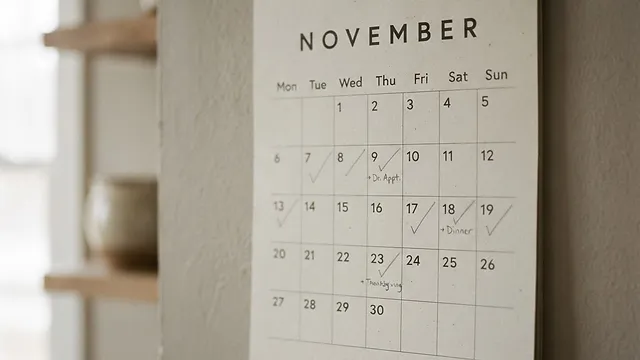
The most common question we get after "what is it" is "what actually happens once you start". Here is the honest calendar.
Before day one: the deep questions
About 30 minutes in total, roughly 15 of questions for you and 15 with your child, done together, in either order, on different days if you like. Type or answer by voice, whichever is natural. These questions are where the coaching comes from: what your child does when nobody directs them, what they quit and why, what they cannot stop talking about. Rushing this is the only way to do it wrong.
See example answers at Where a record begins.Day one: the plan arrives
Your child's plan is built from those answers: a mission in plain words, one or two live projects scoped small enough to actually finish, books and activities chosen for this specific child, and the boundaries you set, spending, contact, sharing, all under your control. You read it before your child does.
Day two: your own first use
While your child is still reading the plan, you open the parent space, the second room only the adults see, and ask Cora your first question there. It can be anything about supporting your child or about parenting itself, and your child never sees it.
Week one: the first conversation, the first three actions
Your child meets Cora and the week has exactly three concrete actions, each 20 to 30 minutes, at least one needing no parent at all. Something gets made, something gets asked, something gets written down with a date on it. Small on purpose: the habit being built is finishing.
The sentence you did not have before
Somewhere in the first weeks you get a plain, positive name for what your child actually is. Not a score, not a percentile, not a diagnosis. A word like builder, or organizer, or someone who finishes things. Most parents can describe what their child struggles with far more fluently than what their child is, and having language for the second one changes how a whole family talks about a person.
Weeks two and three: the record begins
The first milestone completes. The first journal entry lands, in your child's words, not ours. Often the first obstacle gets recorded too, something that went wrong and what they tried, which will read as ordinary now and as gold in five years. You can watch all of it, and the daily check-in keeps a gentle rhythm without you pushing.
Day thirty: something exists
Your first parent digest arrives: what happened this month, what was made, one thing worth asking about at dinner. And the record now contains its first dated evidence, a finished piece of work, a reflection, maybe a setback with notes. Not impressive yet. Real. Everything after this is compounding.
There is always something in progress
Projects arrive from three directions. Distinction builds them around what your child is actually like. A mentor can set one. And your child can invent their own, which is the point at which most parents realise something has shifted.
Underneath all of it runs a curriculum of human intelligences: the things that decide whether a capable young person ever finishes anything. Resilience, agency, and the others we are still writing. Your child works through them as projects, in story form rather than as worksheets, and each one ends in something they made rather than a mark.
So there is never a week where nothing is happening because nobody had a good idea. That was the failure mode we built this to remove.
If at any point in these thirty days it is not right for your family, the money-back guarantee applies, no questions beyond the ones that help us improve.
That is the first month. The next seven years are the point.